

Looking to the Future of Regenerating Hollow Organs

Harvard Apparatus
Harvard Apparatus

Welcome back to our last installment on Harvard Apparatus. Today is all about what’s coming next for the patients influenced by the regenerative medicine that is enabled by Harvard Apparatus’ technology.

If they can make a synthetic trachea, why not another organ? Looking into the future, other hollow organs could be coming soon to a laboratory near you. Only a few thousand people a year are diagnosed with tracheal cancer or trauma, but the technology can be used in the future for other organs that impact more people. Once creating a synthetic trachea has been mastered scientists can look to other hollow organs, like the esophagus.

There are approximately twenty times more patients every year diagnosed with esophageal cancer compared to tracheal cancer. However, like tracheal cancer, esophageal cancer has a high fatality rate due to late diagnosis and thus limited ability to remove the tumors once identified. Unlike the trachea however, the esophagus contracts and expands very often. To date, there are no synthetic esophagi created, but basic research is making progress.

When it comes to solid organs, like the heart and the lungs there has only been one large development. At Massachusetts General Hospital Dr. Harold Ott decellularized a rat lung, recellularized it and transplanted it back into a rat. The rat lived for two weeks after the transplant. This was a large breakthrough, but this process is a long way from becoming commercialized.

What about the United States? Are synthetic organ transplants approved? The doctor associated with Harvard Apparatus received approval from the FDA to perform the first US transplant of an artificial trachea. A little girl with tracheal agenesis—the lack of a part or a whole trachea, will receive a brand new artificial trachea. She will be given a second chance at living a normal life. With a clinical trial underway in Russia, and a first in man in the United States set for the future the commercialization of this surgery is more real than ever.

We hope you enjoyed our miniseries on Harvard Apparatus, and hope you stick around for the rest of our series on regenerative medicine. Until next time, tweet at us or comment here about what else you’d like to hear about from us!
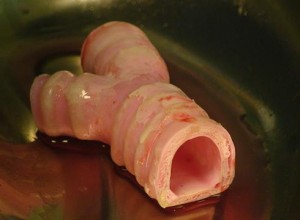
Tracheal Transplantation

Synthetic Trachea, Harvard Apparatus

Welcome back to our mini-series on the Harvard Apparatus Regenerative Technology group of Harvard Biosciences. We’re here to explore the advancements made using the technologies by Harvard Biosciences. Pairing up with a world leading surgeon, four synthetic tracheal transplants have been conducted to date. The benefit of using a synthetic transplant is that the organ will essentially be off the shelf, there’s no waiting and matching a donor required. Thousands of people a year die waiting for transplants of various organs. Also, the mechanism for transplant of a synthetic organ as opposed to a donor organ doesn’t differ.

But why start with the trachea? The trachea structurally is a relatively simple organ. Without the bronchi the trachea is a hollow tube shaped organ with no complex nerve involvement. This makes the creation of a synthetic trachea relatively easier than other organs. Also, tracheal cancer is usually fatal since the diagnosis is normally too late for tumor removal. The trachea also does not involve contracting muscle movement.

The first transplant came from the decellularization of a donor trachea followed by the recellularization with the patient’s own stem cells. However, the next four transplants were made synthetically. The second and third transplants occurred on cancer patients. The organs were created using electro spinning. The first patient treated with a synthetic scaffold is still alive with his new trachea and living a normal life that without the trachea he wouldn’t have had. The second synthetic patient unfortunately passed away from complications from prior chemotherapy, but he was granted a second chance at a normal life with his new trachea.

The fourth and fifth surgeries were successfully performed recently on trauma patients as a part of a clinical trial in Russia.

With the technology provided by Harvard Apparatus, researchers are planning strategies that will provide people with a better quality of life after their transplant. But where can we go from here? Check back in for our last post on what’s next for the technology of Harvard Apparatus. Let us know what you think about the changes Harvard Apparatus is making in people’s lives @TRA360!

Boston, MA and the Netherlands: two worlds apart that share one common interest…

Boston and the Netherlands joined forces during BIO 2012

…If you’re thinking winning sports teams, try again. (Hup holland, anyone?) However, if your second guess was the common interest of life sciences, then you hit the nail on the head. Remember when BIO 2012 happened back in June and more than 16,000 attendees from all around the world attended this massive biotech conference? (Need a refresher? We wrote several blog posts about TRA360’s experience here). With international pavilions galore and representatives from companies in the biotech, life science and pharmaceutical industries, collecting business cards and establishing relationships were top priorities on everyone’s mind.

Seeing as the life science industry is a major part of what we do here at TRA360, we are always looking to expand our network and meet new people in the business, both locally and internationally. While trolling the Internet recently, an article from the International Business section of Boston.com entitled, “Partnering Opportunities In The Life Sciences Between Boston and the Netherlands” caught my eye. Check out what makes both Boston and the Netherlands so compatible with their mutual interest of life science (facts taken from Boston.com):

  • Several MA life sciences companies are using the Netherlands as part of their European operations.
  • Dutch life sciences recognizes Boston as a center of innovation in the life sciences, and sees it as an important entry point for the business of the Dutch life sciences companies in the United States.
  • MA life sciences companies may want to explore setting up a presence in the Netherlands
  • Many executives in the life sciences industry in the Netherlands worked in Boston earlier in their career, and several Dutch entrepreneurs have founded biotech companies in the Boston Area

As you can see, the Netherlands and Boston’s mutual interest in the life sciences has essentially established a benchmark for understanding business practices and building relationships.

Did you attend BIO 2012? What other countries do you think has the potential to collaborate with the US in the bio/pharma/life science industries? What do you think is in store for the future between Boston and the Netherlands? Let us know your thoughts!  

More on the Technology of Harvard Apparatus

Infrared Imaging, Harvard Apparatus

Welcome back and here we are again with Harvard Apparatus. You might ask what else Harvard Apparatus has for technology, and here we are with your answer. They use electro spinning and infrared cameras to assist researchers.

Electro spinning is a relatively new technology where charged liquid goes through an electromagnetic field. Once it travels through the field the polymer within the liquid threads itself on the drum and creates a scaffold of homogeneous thickness. The voltage in the electromagnetic field causes the polymer to become strand-like and intertwine with itself on the drum. The cells adhere to the thin proliferation on the drum and create the tissue necessary. In order to produce different morphologies and orientations of tissues, the parameters of both the polymer and the process can be adjusted. However, mapping can be difficult since the polymers do not intertwine the same way every time.

Harvard Apparatus also uses infrared cameras to monitor the function of organs. In the past there was no easy way to detect how a donor organ is functioning without using dyes or stains. Dyes and stains, however effective, negatively affect the organ and may make them unusable to be transplanted. The picture from the infrared camera uses the water content and the temperature of the cells in the organ to see how they’re functioning. This technology can be used as well to identify the exact spot a heart attack is occurring so a surgeon can inject stem cells after the attack to help the body repair the damaged cardiac tissue. It can also be used to diagnose and predict the appearance of a burn over a month later after only three hours so that treatment can be administered significantly sooner.

Using these two technologies, Harvard Apparatus is enabling researchers to make large advancements in the world of medicine and specifically regenerative medicine. Stick around as next time we will investigate how researchers used these and the technologies mentioned in our last blog to regenerate full organs, like the trachea to give people a whole new life. What do you think of this new technology? Let us know @TRA360!