

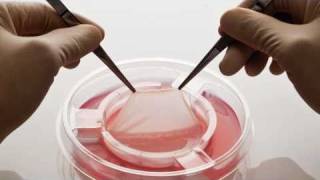
Organogenesis, Apligraf, Gintuit, and the Future of Rengerative Medicine

Apligraf, Organogenesis, Inc.

We’re back with more on Organogenesis. We figure if Organogenesis doesn’t stop at one life changing product, why should we stop at one blog about them.  Welcome back and enjoy the rest of what they have to offer.

Organogenesis also developed an oral soft tissue to replace the process of palatal grafting. For people with receding gums, the normal fix involves taking pieces of the palate and grafting them into the gum to replace the tissue. The process is just as painful as it sounds, you get two wounds for the price of one graft. Plus it usually involves multiple surgical procedures since the palate is so small. In response, Organogenesis introduced the Gintuit. The Gintuit is made of isolated living cells from human skin and grown with bovine collagen. This enables the doctor to have enough tissue to replace a large section of gum without having to cut the palate and keeps the patient from enduring multiple long and painful procedures.

In addition to these products, Organogenesis developed technology for the transportation of their products. In order to ensure the best results they, like Wendy’s, ensure their Apligraf and Gintuit are “fresh never frozen.”  Organogenesis gets their products around the world by the next day while maintaining the body’s natural temperature for optimum cell life. Even better than that, when kept at body temperature the shelf life of these products is an amazing ten days. Other like products are shipped frozen and doctors are alerted that through the process of freezing and thawing cells, some are lost. With the Apligraf and the Gintuit, freezing and thawing are not an issue so more cells remain intact for optimum results on the patient.

With two life changing products and a revolutionary way of storing the products, Organogenesis provides a new face for regenerative medicine. Providing relief to those with chronic wounds, and giving those who need a gum graft with a less painful and invasive option, Organogenesis is giving people their lives back, and providing them with the relief they have been searching for.

Check in with us again as we continue this series with other companies like Organogenesis. Know someone who would like to be featured? Have any comments on this article? Let us know here or tweet at us @TRA360!
Lampreys: Spinal Cord Regeneration Research at the MBL

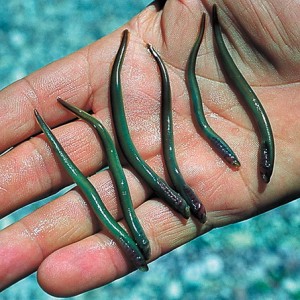
Sea Lamprey
Sea Lamprey

We’re here one more time with the Marine Biological Laboratory. We’ve already told you all about the work scientists are doing with the Xenopus, but there’s one other interesting laboratory located at the MBL, too. The lab run by Dr. Jennifer Morgan opened in June of 2012, and is studying the lamprey, the jawless fish. The lamprey is a very early evolved vertebrate with no true bones.

What’s so cool about a lamprey? If you transect the spinal cord of a lamprey, it will spontaneously regain the ability to start swimming around again. After only eleven weeks of recovery, the spinal transected lamprey looks almost exactly the same as an uninjured, control lamprey. Some marine organisms are really good at regeneration, and the lamprey specifically has a better ability to recover from spinal cord injury than a human has. Also, even though lampreys are much lower on the evolutionary ladder than we are, they are true vertebrates and they have a nervous system with features that are analogous to that found in a human.

What happens in a human when the spinal cord is cut? In humans, spinal cord injury induces damage to the neurons and glial cells in the nervous system. The glial cells form scar tissue at the injury site, and they also release molecules that tell the neurons to stop growing.  In addition, other neurons die or lose their connections, thereby paralyzing the human.  Animal models have demonstrated that if you take a peripheral nerve and create a bridge for the spinal cord neurons , the spinal cord neurons can actually grow. This means that the environment surrounding the spinal cord neurons is very important for determining whether these neurons can regenerate.  This is controlled, at least in part, by the actual gene expression.

The lamprey not only has a very similar nervous system, but the genes that it expresses are similar to that of a human.  If the gene sequences that enable regeneration can be identified in a lamprey, it is possible that they can be isolated in a human as well. Finding these key genes that support regeneration could therefore one day help those who have suffered paralyzing brain and spinal cord injuries.

Using marine models for research that could help humans is an important goal of the MBL. In the case of the Xenopus and the lamprey, the advances being made could eventually change the future of medicine. We hoped you enjoyed our mini-series on the Marine Biological Laboratory and want you to let us know your thoughts @TRA360! Keep your eyes open for more on our blog!

Xenopus: Future for Regenerative Medicine?

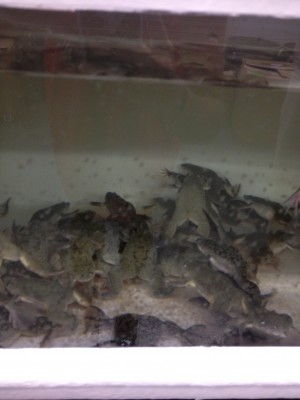
Have you been itching for more on the MBL? We’re back with more about the research! Today we’re looking into the research being done under Marko Horb on the Xenopus. What is a Xenopus? you may ask. A Xenopus is an aquatic frog that is helping scientists understand regeneration.

Xenopus, Marine Biological Laboratory
Xenopus, The Marine Biological Laboratory

The Xenopus possesses some regenerative capabilities, like the ability to regenerate limbs, tails, and the lens of its eye. The National Xenopus Resource at the MBL is a national stock center for the frogs and provides them to researchers, who study cellular and molecular processes in the frogs to learn how regeneration works.  The research may one day lead to understanding how regeneration might be possible in humans.

What else can you do with the frog? The Xenopus has a similar structure of liver and pancreas to that of a human. This enables researchers to look into transdifferentiation of cells. It is possible to take liver cells, which will regenerate in a human body naturally, and convert them into pancreatic cells. Right now, research is being done to explore the mechanism taken during the process of transdifferentiation so that liver cells can be directed to making specifically insulin-producing cells, known as beta cells.  The biggest struggle here is directing the cells to become only beta cells and not other pancreatic cells, such as glucagon-producing alpha cells. In the lab at the MBL, they can stain the different pancreatic cells and see what controls the production of each type of cell, however the struggle will be finding the exact pathway to insulin-producing cells and creating a way to always have it follow this path in the future.  Using liver cells instead of stem cells or injecting insulin has the potential to save the lives of diabetics. In the future, once this process is set, diabetics might have the ability to go in once a year, have a small piece of their liver removed and converted to insulin cells that will last them the rest of the year instead of injecting insulin on a daily basis.

Come back next time and learn about the work done by Jennifer Morgan at the MBL on lampreys! Let us know what you think @TRA360!

Introducing the Marine Biological Laboratory (MBL)

Lillie Laboratory, Marine Biological Laboratory

TRA360 is back once again bringing you news on the Marine Biological Laboratory (MBL), an international center for biological research and education founded in Wood’s Hole, Massachusetts in 1888. Researchers are drawn to the MBL to conduct cutting-edge biomedical and environmental research or to take one of the MBL’s 22 advanced science courses.  Recently, the facility underwent major renovations, including an upgrade to its educational cornerstone, Loeb Laboratory, and established the new Eugene Bell Center for Regenerative Biology & Tissue Engineering.

In its Marine Resources Center, the MBL maintains marine models such as sea urchins and squid that researchers study to learn about human biology, including neurology and embryology. To maintain these creatures, MBL pumps in over a million gallons of sea water a day from the sea into this facility.

What else is happening at the MBL? Recently the MBL partnered with several other educational institutions to create the Encyclopedia of Life, an effort to create an internet page for each species in the world. There are about 1.9 million species on Earth, and the Encyclopedia to date has over 1 million pages.

We hope you enjoyed our intro into the MBL. Stay tuned for our next two posts about two of the laboratories within the MBL that are doing work in the Regenerative Medicine field. Let us know what you think so far @TRA360!