

Lampreys: Spinal Cord Regeneration Research at the MBL

Sea Lamprey
Sea Lamprey

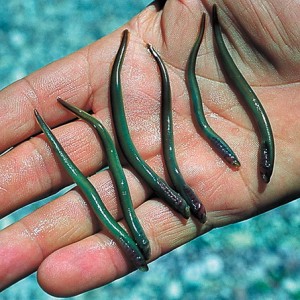
We’re here one more time with the Marine Biological Laboratory. We’ve already told you all about the work scientists are doing with the Xenopus, but there’s one other interesting laboratory located at the MBL, too. The lab run by Dr. Jennifer Morgan opened in June of 2012, and is studying the lamprey, the jawless fish. The lamprey is a very early evolved vertebrate with no true bones.

What’s so cool about a lamprey? If you transect the spinal cord of a lamprey, it will spontaneously regain the ability to start swimming around again. After only eleven weeks of recovery, the spinal transected lamprey looks almost exactly the same as an uninjured, control lamprey. Some marine organisms are really good at regeneration, and the lamprey specifically has a better ability to recover from spinal cord injury than a human has. Also, even though lampreys are much lower on the evolutionary ladder than we are, they are true vertebrates and they have a nervous system with features that are analogous to that found in a human.

What happens in a human when the spinal cord is cut? In humans, spinal cord injury induces damage to the neurons and glial cells in the nervous system. The glial cells form scar tissue at the injury site, and they also release molecules that tell the neurons to stop growing.  In addition, other neurons die or lose their connections, thereby paralyzing the human.  Animal models have demonstrated that if you take a peripheral nerve and create a bridge for the spinal cord neurons , the spinal cord neurons can actually grow. This means that the environment surrounding the spinal cord neurons is very important for determining whether these neurons can regenerate.  This is controlled, at least in part, by the actual gene expression.

The lamprey not only has a very similar nervous system, but the genes that it expresses are similar to that of a human.  If the gene sequences that enable regeneration can be identified in a lamprey, it is possible that they can be isolated in a human as well. Finding these key genes that support regeneration could therefore one day help those who have suffered paralyzing brain and spinal cord injuries.

Using marine models for research that could help humans is an important goal of the MBL. In the case of the Xenopus and the lamprey, the advances being made could eventually change the future of medicine. We hoped you enjoyed our mini-series on the Marine Biological Laboratory and want you to let us know your thoughts @TRA360! Keep your eyes open for more on our blog!

Xenopus: Future for Regenerative Medicine?

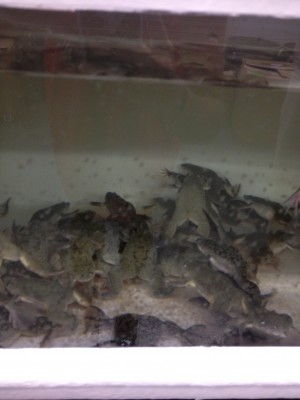
Have you been itching for more on the MBL? We’re back with more about the research! Today we’re looking into the research being done under Marko Horb on the Xenopus. What is a Xenopus? you may ask. A Xenopus is an aquatic frog that is helping scientists understand regeneration.

Xenopus, Marine Biological Laboratory
Xenopus, The Marine Biological Laboratory

The Xenopus possesses some regenerative capabilities, like the ability to regenerate limbs, tails, and the lens of its eye. The National Xenopus Resource at the MBL is a national stock center for the frogs and provides them to researchers, who study cellular and molecular processes in the frogs to learn how regeneration works.  The research may one day lead to understanding how regeneration might be possible in humans.

What else can you do with the frog? The Xenopus has a similar structure of liver and pancreas to that of a human. This enables researchers to look into transdifferentiation of cells. It is possible to take liver cells, which will regenerate in a human body naturally, and convert them into pancreatic cells. Right now, research is being done to explore the mechanism taken during the process of transdifferentiation so that liver cells can be directed to making specifically insulin-producing cells, known as beta cells.  The biggest struggle here is directing the cells to become only beta cells and not other pancreatic cells, such as glucagon-producing alpha cells. In the lab at the MBL, they can stain the different pancreatic cells and see what controls the production of each type of cell, however the struggle will be finding the exact pathway to insulin-producing cells and creating a way to always have it follow this path in the future.  Using liver cells instead of stem cells or injecting insulin has the potential to save the lives of diabetics. In the future, once this process is set, diabetics might have the ability to go in once a year, have a small piece of their liver removed and converted to insulin cells that will last them the rest of the year instead of injecting insulin on a daily basis.

Come back next time and learn about the work done by Jennifer Morgan at the MBL on lampreys! Let us know what you think @TRA360!

Introducing HootSuite Conversations

Will you be using HootSuite Conversations?

Lets face it- as marketers we like to stay connected at all times. We can’t help but engage with our team members, clients, consumers and other marketers/PR pros alike. Yes, we rely heavily on Facebook chat and G-talk, but as of today, HootSuite has introduced the latest addition to the HootSuite family: HootSuite Conversations! 

HootSuite Conversations allows for internal collaboration within your brand. Whether you want to communicate with a team member, your boss or even your cube-mate, HootSuite Conversations allows for any and all social collaboration within the HootSuite dashboard. Another perk is the ability to import your Google or Yahoo e-mail accounts. With this new feature, social media initiatives and platforms are simplified and easily accessible to your entire company.

Building an online community within a community makes all-around communication easier and more enjoyable because of the organization. Everything from messaging someone to commenting on a group message is right at your fingertips. Although this is a brand new HootSuite feature, as a Social Media Strategist, I feel that HootSuite Conversations is the perfect concept that every brand can embody. HootSuite has moved on to bigger and better discoveries with your brand’s needs in mind.

Do you already use HootSuite? If so, will you be testing out the new HootSuite Conversations feature within your company? 

Is it Time to Clean Out Your Social Media Closet?

Fall is upon us and that means a digital change for your company!

Autumn has arrived whether we’re ready for it or not. With it brings cooler temperature, seasonal pumpkin spice drinks and changing out your summer wardrobe to heavier garments like sweaters and jackets.  However, cleaning out your closet isn’t the only fall housekeeping that should be done during this season of crunchy leaves and apple picking. Organizing and prioritizing your “to do” social initiatives and digital projects are in order to make sure you stay on top of the latest social trends, platforms and key ideas. The seasons are changing and so should your digital approach.

Don’t be stuck in your old ways

As humans, it’s in our blood to resist change when we’re stuck in our ways. We feel safe and comfortable in our routine, so why change a good thing? Unfortunately, many brands are unwilling to take the risk to make a change to their digital behavior and strategy; thus, they will never know what they are missing out on until it’s too late. So, how does one do it? Start by setting a list of goals and tailoring your daily routine to meeting those goals. For example, reach out to two or three followers per day by engaging through Facebook or Twitter. Not only will they not expect this, but will most likely appreciate the effort and begin to build a relationship with your brand.

Make a statement

Countless marketers and digital professionals alike are constantly trying to figure out how to stand out from the masses. This fall, don’t sit back and watch as other brands are successfully pulling off successful marketing campaigns and promotions while you struggle to keep up. Set your brand apart and make a statement about your brand. What are you trying to accomplish by being digitally active? Ask yourself this before tackling a major initiative. Would you like to acquire more customers? Build relationships with new potential consumers? Foster relationships with your current client base? All of the above? Once you are able to pinpoint exactly what your goals are, it’s time to be bold and make a statement. Think about the successful brands you know. Are these companies successful because they found their niche which essentially helped them stand out from their competition? If so, how did they execute? Think about what you can do this fall for your brand that will bring your company to the next level. Holding a brainstorming session with co-workers and colleagues is a great first step.

Fall has made its way back on the calendar after a warm and relaxing summer. Now that a new crunchy leaf has turned, when will you be cleaning out your digital wardrobe? Do you have any ideas for your company this fall? Let us know and comment below or tweet to us @TRA360!