

Looking to the Future of Regenerating Hollow Organs

Harvard Apparatus
Harvard Apparatus

Welcome back to our last installment on Harvard Apparatus. Today is all about what’s coming next for the patients influenced by the regenerative medicine that is enabled by Harvard Apparatus’ technology.

If they can make a synthetic trachea, why not another organ? Looking into the future, other hollow organs could be coming soon to a laboratory near you. Only a few thousand people a year are diagnosed with tracheal cancer or trauma, but the technology can be used in the future for other organs that impact more people. Once creating a synthetic trachea has been mastered scientists can look to other hollow organs, like the esophagus.

There are approximately twenty times more patients every year diagnosed with esophageal cancer compared to tracheal cancer. However, like tracheal cancer, esophageal cancer has a high fatality rate due to late diagnosis and thus limited ability to remove the tumors once identified. Unlike the trachea however, the esophagus contracts and expands very often. To date, there are no synthetic esophagi created, but basic research is making progress.

When it comes to solid organs, like the heart and the lungs there has only been one large development. At Massachusetts General Hospital Dr. Harold Ott decellularized a rat lung, recellularized it and transplanted it back into a rat. The rat lived for two weeks after the transplant. This was a large breakthrough, but this process is a long way from becoming commercialized.

What about the United States? Are synthetic organ transplants approved? The doctor associated with Harvard Apparatus received approval from the FDA to perform the first US transplant of an artificial trachea. A little girl with tracheal agenesis—the lack of a part or a whole trachea, will receive a brand new artificial trachea. She will be given a second chance at living a normal life. With a clinical trial underway in Russia, and a first in man in the United States set for the future the commercialization of this surgery is more real than ever.

We hope you enjoyed our miniseries on Harvard Apparatus, and hope you stick around for the rest of our series on regenerative medicine. Until next time, tweet at us or comment here about what else you’d like to hear about from us!

3 Lessons Writers Can Apply From Hurricane Isaac

It has been the talk of the country for the last week and is pretty much unavoidable through the media, word of mouth or maybe you personally know someone experiencing it right now. What started off as a torm off the coast of South America turned into a tropical depression near the Caribbean, which then evolved to a full-on category 1 hurricane. Frankly, we aren’t surprised. In fact, we had been anticipating Isaac to hit the coastline of the Gulf of Mexico for about a week now. But yet somehow the hurricane (hitting New Orleans seven years exactly to the day of Katrina) came as a shock to the system when it arrived. Likewise, when a writer sits down to produce content, whether it is a blog post, article, newsletter, or even a book, their ideas evolve over time. It starts off as a rainstorm, or jotting down fragments of ideas through bullet points, to a full-blown hurricane, or, in some cases, successfully finishing a novel. Here’s the breakdown of why Isaac may be relevant to you as a writer:


  • An idea forms.. 

When you’re stuck on what to write and staring at a blank screen for sometimes hours on end, it’s only natural to feel like giving up. Sometimes picking up and doing something else in a different location can give you that spark to create stellar content. Like Isaac, he started off on the coast of upper South America, and look where he is now! Key takeaway: when you come up with a point or idea don’t hold back: run with it.

  • Speeds of up to 80mph

Isaac started from nothing. A small storm that picked up momentum, speed and power, sweeping through islands, countries and now to the US, taking down anything and everything in its way. As a writer, we must develop our ideas from bullet points to sentences to paragraphs that somehow all fits in together. Yes, it takes time and patience to create a masterpiece, but once you start running with an idea and gaining momentum, you’ll soon take off with speeds over 80 mph!

  • Expect the unexpected

Whether (or maybe in this case, weather?) it’s Katrina, Isaac, Andrew, Faye or Debbie, we are forced to come to terms with the unexpected. And no, these are not distant relatives popping in for a barbeque. Hurricanes may change for the better, taking a turn and peacefully drifting far off into the ocean, or for the worse, devastating thousands upon thousands and wiping out anything in its path.  As writers, we must expect the unexpected and brace ourselves for what may come in the future. Seasoned writers know this to be true of writing and producing content. By learning to expect the unexpected, we are bettering ourselves as content producers and writers. Did New Orleans think over 500,000 people would be without power or water the first day Isaac touched land? No. But the smart ones planned ahead to evacuate well before the storm was a threat to the area or stocked up on survival goods and moved to a safe location away from the water. 

You may not have an “eye of the storm” idea right in the beginning, but generating content is a process. Writers must remain cool, calm and collected until that trigger point hits. Don’t be intimidated by the storm, but rather embrace it and drive it home!

Do you have any other comparisons between Isaac and writing? Tweet to us and let us know @TRA360! 

Tracheal Transplantation

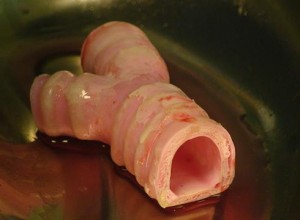
Synthetic Trachea, Harvard Apparatus

Welcome back to our mini-series on the Harvard Apparatus Regenerative Technology group of Harvard Biosciences. We’re here to explore the advancements made using the technologies by Harvard Biosciences. Pairing up with a world leading surgeon, four synthetic tracheal transplants have been conducted to date. The benefit of using a synthetic transplant is that the organ will essentially be off the shelf, there’s no waiting and matching a donor required. Thousands of people a year die waiting for transplants of various organs. Also, the mechanism for transplant of a synthetic organ as opposed to a donor organ doesn’t differ.

But why start with the trachea? The trachea structurally is a relatively simple organ. Without the bronchi the trachea is a hollow tube shaped organ with no complex nerve involvement. This makes the creation of a synthetic trachea relatively easier than other organs. Also, tracheal cancer is usually fatal since the diagnosis is normally too late for tumor removal. The trachea also does not involve contracting muscle movement.

The first transplant came from the decellularization of a donor trachea followed by the recellularization with the patient’s own stem cells. However, the next four transplants were made synthetically. The second and third transplants occurred on cancer patients. The organs were created using electro spinning. The first patient treated with a synthetic scaffold is still alive with his new trachea and living a normal life that without the trachea he wouldn’t have had. The second synthetic patient unfortunately passed away from complications from prior chemotherapy, but he was granted a second chance at a normal life with his new trachea.

The fourth and fifth surgeries were successfully performed recently on trauma patients as a part of a clinical trial in Russia.

With the technology provided by Harvard Apparatus, researchers are planning strategies that will provide people with a better quality of life after their transplant. But where can we go from here? Check back in for our last post on what’s next for the technology of Harvard Apparatus. Let us know what you think about the changes Harvard Apparatus is making in people’s lives @TRA360!

Do you HootSuite U?

Are you looking to further expand your social media superpowers to better enhance your brand? Do you long for a tool that helps you organize your various social media outlets in a given space? You may already have checked out our series on how HootSuite Pro can accomplish just that. But we’re not here to talk about going Pro. HootSuite University (or “HootSuite U”) is essentially an extension to the HootSuite family that offers some pretty sweet perks.

How can users benefit from HootSuite U?

HootSuite describes HootSuite U as “a learning program designed to educate people on HootSuite features and social media marketing best practices”. The way we see it, HootSuite U comes hand in hand with Hootsuite’s various platforms (Basic, Pro, Enterprise, etc.) and helps its users fully understand what Hootsuite has to offer in terms of social media. Further, students enrolled in HootSuite U take three courses, each with their own exam at the end. After passing each exam, HootSuite U grads will be listed in HootSuite’s Social Media Consultant Directory and receive access to a library of webinars from industry experts.

As a social media consultant myself, I think HootSuite U is an extremely valuable tool. Business owners and non-tech savvy individuals alike are desperately trying to find a way into the social media world but tend to become too overwhelmed by the process, don’t have the time/patience, or don’t know where to turn to when looking for social media assistance. The value of HootSuite U is clear, but it’s the dedication of the student and their willingness to learn that makes all the difference.

For $30.99/month for non-HootSuite Pro users, or $21/month for HootSuite Pro users, HootSuite U seems worth it for those looking to enter the digital world. Check it out, we’re even in HootSuite U’s Hoot100 video! Do you U? If not, do you know anyone who could benefit from learning some new social media tricks and tips? Tweet to us and let us know @TRA360!