

IEEE Life Sciences Portal

After spending time at BIO International Conference in June, we have started following the developments of the IEEE. Who are the IEEE you may ask, and we’re delighted to tell you all about them.

First, IEEE stands for Institute of Electrical and Electronics Engineers. Tracing back as far as 1884 to a small group of engineers who convened in New York, they strove to provide support for professionals in engineering and help each other to eventually use their innovative characteristics to better society as a whole. They started out as the American Institute of Electrical Engineers with members including Thomas Edison and Alexander Graham Bell. In 1912, when radio became a booming area, the IRE, Institute of Radio Engineers, sprung up along with the field. Both the IRE and the AIEE thrived and boasted large membership counts, but in January of 1963 the two organizations merged to form the IEEE. The day it was formed the IEEE contained 150,000 members, of which 140,000 were domestic to the United States. Since its formation, the IEEE has boomed with membership and now boasts over 395,000 members in 160 countries worldwide.

What does the IEEE offer for people like us who aren’t engineers? The IEEE recently launched the Life Sciences Portal on their website. On the portal there are links to articles pertaining to the new happenings in the life sciences industry. They have banner of articles that give the readers all new information about the ongoings today. As well, there is a technology spotlight pertaining to the newest developments in technology in the life sciences industry and a featured article about something interesting going on today. Can you find out about events as well as news? The IEEE features a side bar calendar with events upcoming in the life science field.

We asked the IEEE’s Content Manager  for the Portal, Lee Moffitt, what he thought was the most beneficial thing about the Life Sciences Portal. He said “I believe it is most beneficial in providing a means for people working in the life sciences and those working in technology to come together to learn and cooperate” And we couldn’t agree more. The portal provides an accessible and comprehensive resource for information in the life sciences. Check out what they have to offer and let us know your opinions @TRA360!

Looking to the Future of Regenerating Hollow Organs

Harvard Apparatus
Harvard Apparatus

Welcome back to our last installment on Harvard Apparatus. Today is all about what’s coming next for the patients influenced by the regenerative medicine that is enabled by Harvard Apparatus’ technology.

If they can make a synthetic trachea, why not another organ? Looking into the future, other hollow organs could be coming soon to a laboratory near you. Only a few thousand people a year are diagnosed with tracheal cancer or trauma, but the technology can be used in the future for other organs that impact more people. Once creating a synthetic trachea has been mastered scientists can look to other hollow organs, like the esophagus.

There are approximately twenty times more patients every year diagnosed with esophageal cancer compared to tracheal cancer. However, like tracheal cancer, esophageal cancer has a high fatality rate due to late diagnosis and thus limited ability to remove the tumors once identified. Unlike the trachea however, the esophagus contracts and expands very often. To date, there are no synthetic esophagi created, but basic research is making progress.

When it comes to solid organs, like the heart and the lungs there has only been one large development. At Massachusetts General Hospital Dr. Harold Ott decellularized a rat lung, recellularized it and transplanted it back into a rat. The rat lived for two weeks after the transplant. This was a large breakthrough, but this process is a long way from becoming commercialized.

What about the United States? Are synthetic organ transplants approved? The doctor associated with Harvard Apparatus received approval from the FDA to perform the first US transplant of an artificial trachea. A little girl with tracheal agenesis—the lack of a part or a whole trachea, will receive a brand new artificial trachea. She will be given a second chance at living a normal life. With a clinical trial underway in Russia, and a first in man in the United States set for the future the commercialization of this surgery is more real than ever.

We hope you enjoyed our miniseries on Harvard Apparatus, and hope you stick around for the rest of our series on regenerative medicine. Until next time, tweet at us or comment here about what else you’d like to hear about from us!

Tracheal Transplantation

Synthetic Trachea, Harvard Apparatus

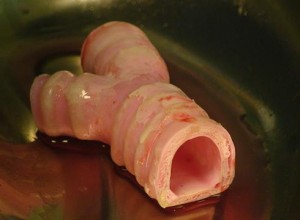
Welcome back to our mini-series on the Harvard Apparatus Regenerative Technology group of Harvard Biosciences. We’re here to explore the advancements made using the technologies by Harvard Biosciences. Pairing up with a world leading surgeon, four synthetic tracheal transplants have been conducted to date. The benefit of using a synthetic transplant is that the organ will essentially be off the shelf, there’s no waiting and matching a donor required. Thousands of people a year die waiting for transplants of various organs. Also, the mechanism for transplant of a synthetic organ as opposed to a donor organ doesn’t differ.

But why start with the trachea? The trachea structurally is a relatively simple organ. Without the bronchi the trachea is a hollow tube shaped organ with no complex nerve involvement. This makes the creation of a synthetic trachea relatively easier than other organs. Also, tracheal cancer is usually fatal since the diagnosis is normally too late for tumor removal. The trachea also does not involve contracting muscle movement.

The first transplant came from the decellularization of a donor trachea followed by the recellularization with the patient’s own stem cells. However, the next four transplants were made synthetically. The second and third transplants occurred on cancer patients. The organs were created using electro spinning. The first patient treated with a synthetic scaffold is still alive with his new trachea and living a normal life that without the trachea he wouldn’t have had. The second synthetic patient unfortunately passed away from complications from prior chemotherapy, but he was granted a second chance at a normal life with his new trachea.

The fourth and fifth surgeries were successfully performed recently on trauma patients as a part of a clinical trial in Russia.

With the technology provided by Harvard Apparatus, researchers are planning strategies that will provide people with a better quality of life after their transplant. But where can we go from here? Check back in for our last post on what’s next for the technology of Harvard Apparatus. Let us know what you think about the changes Harvard Apparatus is making in people’s lives @TRA360!

Connecting Organs to Make Full Humans on Chips

Organ on a Chip
Organ on a Chip

Remember our blog about Dr. Geraldine Hamilton and the work done at the Wyss Institute on organs on chips? Well we’re back with new developments on that story. Less than a month ago, the Wyss sent out a press release about a grant from the Defense Advanced Research Projects Agency, DARPA. DARPA gave the Wyss $37 million to develop their technology.

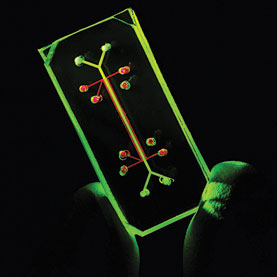
If you missed our last blog be sure to check it out for some background, but we’ll fill you in with a little information now. The Wyss Institute is currently doing research on putting cells from different internal organs on chips the size of a normal USB drive that mimics the way the cells would live within the human body. This enables the testing of different treatments on human cells without full clinical trials, or using animal test subjects. Having the ability to more effectively determine the results on human patients without risking animal or human lives gives this project its standout quality.

The five year project being funded by DARPA grants the founder of the Wyss, Don Ingber, and his team including Kevin Kit Parker, Ph.D., Geraldine Hamilton, Ph.D., Anthony Bahinski, Ph.D., and Daniel Levner, Ph.D., and other researchers, the money to essentially develop a full human outside of the body. DARPA’s $37 million dollar grant covers connecting ten of the Wyss’ organ-on-chip technologies to mimic an entire human body. They want to be able to link the physiological conditions in the body with the instruments in order to create a system of chips that mirrors the body’s response to pharmaceutical treatments. From within the chips the scientists maintain the ability to control the flow of fluid and the viability of cells while still allowing biochemical functionality.

Why is this important? If this project is successful, it will enable the acceptance of effective drugs and the rejection of ineffective ones sooner and with more accuracy than in the past, saving lives, money and time. Also, possibly most amazingly, it will provide information on the efficacy of drugs without using animal models. This can save the lives of lab creatures, a heated ethical issue, as well as more effectively show the advantageous and adverse effects in humans. The Wyss is also working closely with the FDA who has faith in the project as a better model for determining human response to pharmaceutical treatment.

Gaining this grant could save millions of lives over the course of the next five years while it is being developed, and beyond to when it is a universally implemented practice among pharmaceutical companies. Imagine the possibilities, and let us know what you think @TRA360!